
RØDE NT1 5th Generation
Reported in 6 tracked streamer setups.
Tracked 2026-10-19. The retailer listing is the price you pay.
Buy links are affiliate links: we earn a commission at no extra cost to you. Prices are tracked estimates, not live prices. Full disclosure
Our take on the RØDE NT1 5th Generation
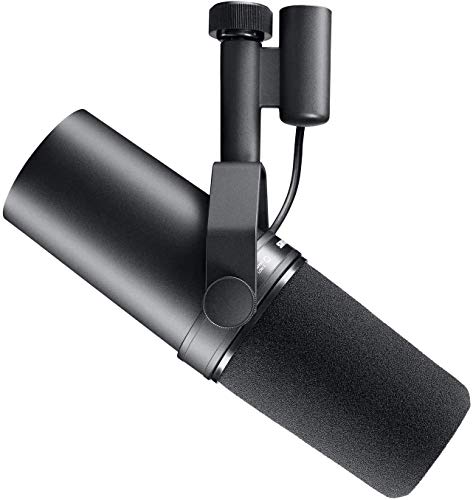
The Rode NT1 5th Gen is a large-diaphragm condenser microphone with both XLR and USB outputs, for streamers who want a studio-style voice. At a tracked $213 its price held between $212 and $214 across 13 readings from July 13 to October 19, 2026, so there is no sale pattern.
The listing cites very low self-noise, a Revolution Preamp and conversion up to 192 kHz. You can plug in over USB or connect an interface over XLR. The body is machined aluminum. Condensers pick up more of the room than dynamics. Retailers rate it 4.7 across 2,073 ratings.
- XLR and USB outputs on one mic
- Very low self-noise per the listing
- 4.7 across 2,073 retailer ratings
- Price flat at $212 to $214, no sale seen
- Condenser capsule picks up room noise
- Studio condenser pricing at $213 tracked
Where it fits in a build
On the move, a mic into the camera keeps audio in sync past the stream delay. See every audio pick
| Connectivity Technology | USB |
| Special Feature | Large-diaphragm cardioid condenser microphone |
| Compatible Devices | Audio Interface, Audio Mixer, Camera, Laptop, Personal Computer |
| Audio Sensitivity | 45 db |
| Microphone Form Factor | Condenser Microphone |
| Frequency Response | 192 KHz |
| Color | Black |
Same job, other budgets


Alternatives worth comparing


RØDE NT1 5th Generation
$213Tracked 2026-10-19
Buy links are affiliate links: we earn a commission at no extra cost to you. Prices are tracked estimates, not live prices. Full disclosure
We do not lab-test hardware. Ratings and review counts come from the retailer listing and are labelled as such; stream-quality figures are conservative planning budgets from our published model. Prices are tracked at build time, not live, and were last refreshed 2026-10-22. How the numbers are derived: methodology. How picks are chosen: editorial policy.