
Teltonika RUT241
Industrial LTE router that runs on 9 to 30 V and never needs a reboot. Pair with a 12V bank and it disappears into the rig.
Tracked 2026-08-26. The retailer listing is the price you pay.
Buy links are affiliate links: we earn a commission at no extra cost to you. Prices are tracked estimates, not live prices. Full disclosure
What it contributes to the stream
This part alone, with every other slot assumed generous and a platform that allows the tier. Your build's real verdict is the lowest ceiling across all its slots, which is what the configurator computes. Conservative planning budgets, not measurements: methodology.
Our take on the Teltonika RUT241
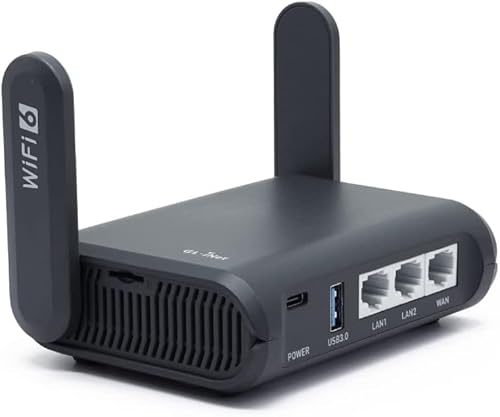
The Teltonika RUT241 is a 4G LTE router for North America, for streamers who want a cellular uplink with an Ethernet port into an encoder. Verizon, AT&T and T-Mobile are the listed carriers.
It supports WAN failover that switches to a backup connection, hotspot functionality, VPN and remote management. The kit includes a 9 W power supply, two LTE antennas, a Wi-Fi antenna and a 1.5 m Ethernet cable. Retailers rate it 4.1 across 45 ratings, at a tracked $198.24.
- WAN failover to a backup connection
- Supports Verizon, AT&T and T-Mobile
- Ethernet cable and antennas included
- 4G LTE Cat 4 only, no 5G
- Wi-Fi spec is listed as 802.11b
Where it fits in a build
Your uplink on the move. An ethernet port lets you wire it straight to the encoder. See every connection pick
| Stream contribution | ~6 Mbps up |
| Type | 4G industrial router |
| Ethernet | 2x |
| Network | LTE Cat4 |
Same job, other budgets


Alternatives worth comparing


Teltonika RUT241
$198.24Tracked 2026-08-26
Buy links are affiliate links: we earn a commission at no extra cost to you. Prices are tracked estimates, not live prices. Full disclosure
We do not lab-test hardware. Ratings and review counts come from the retailer listing and are labelled as such; stream-quality figures are conservative planning budgets from our published model. Prices are tracked at build time, not live, and were last refreshed 2026-10-22. How the numbers are derived: methodology. How picks are chosen: editorial policy.